View Project
As a Product Design Intern at Hiver, I worked on enhancing the customer support experience within Hiver’s shared mailbox—a Gmail & Outlook-based collaboration tool used by 1000+ support teams globally. Agents spent ~40% of their time reading long customer emails and writing replies from scratch. Despite features like assignment, collision detection, and SLA tracking, non-urgent responses took 4–6 hours—well above the <2-hour industry standard. Leadership saw AI as a way to boost agent productivity 10x without losing reply quality or brand voice. I designed an AI Email Assistant that analyzes incoming emails, summarizes intent, and drafts accurate replies—integrated right into Hiver’s compose window.
Project Details
Team Size :- Total ( 1 PM, 1 Senior PD, 1 Product Design Intern, 2 Engineers, 2 Devops)
Duration :- 3 months + Alongside other projects
My Role:- Product Design Intern
About Hiver
Hiver is an easy-to-use AI-powered customer service platform that helps teams manage all their customer communication—email, chat, phone, and WhatsApp—from a single inbox. It allows better collaboration, automates repetitive tasks, and provides helpful insights to improve support. Hiver makes delivering fast, personalized customer support simple and efficient right inside Gmail.
My Contributions:
I conducted market and competitor analysis to understand AI-assisted email workflows, designed wireframes and interactive prototypes for AI summaries, reply drafts, and history views, and iterated on flows based on agent feedback. I worked closely with the PM, senior designer, and engineers to refine interactions, address edge cases like draft persistence, and support design handoff.
Core Problem
Agents lose 3–5 minutes per email reading context and drafting replies, leading to backlog buildup, agent burnout, and delayed customer resolution.
The core issue was not just time inefficiency—agents spent significant effort parsing context and drafting replies—but also cognitive overload, inconsistent response quality, and difficulties in escalation tracking. This led to agent burnout, delayed resolutions, and suboptimal customer experiences.
The solution used AI to generate summaries and draft replies, reducing time and errors while improving visibility for leadership.
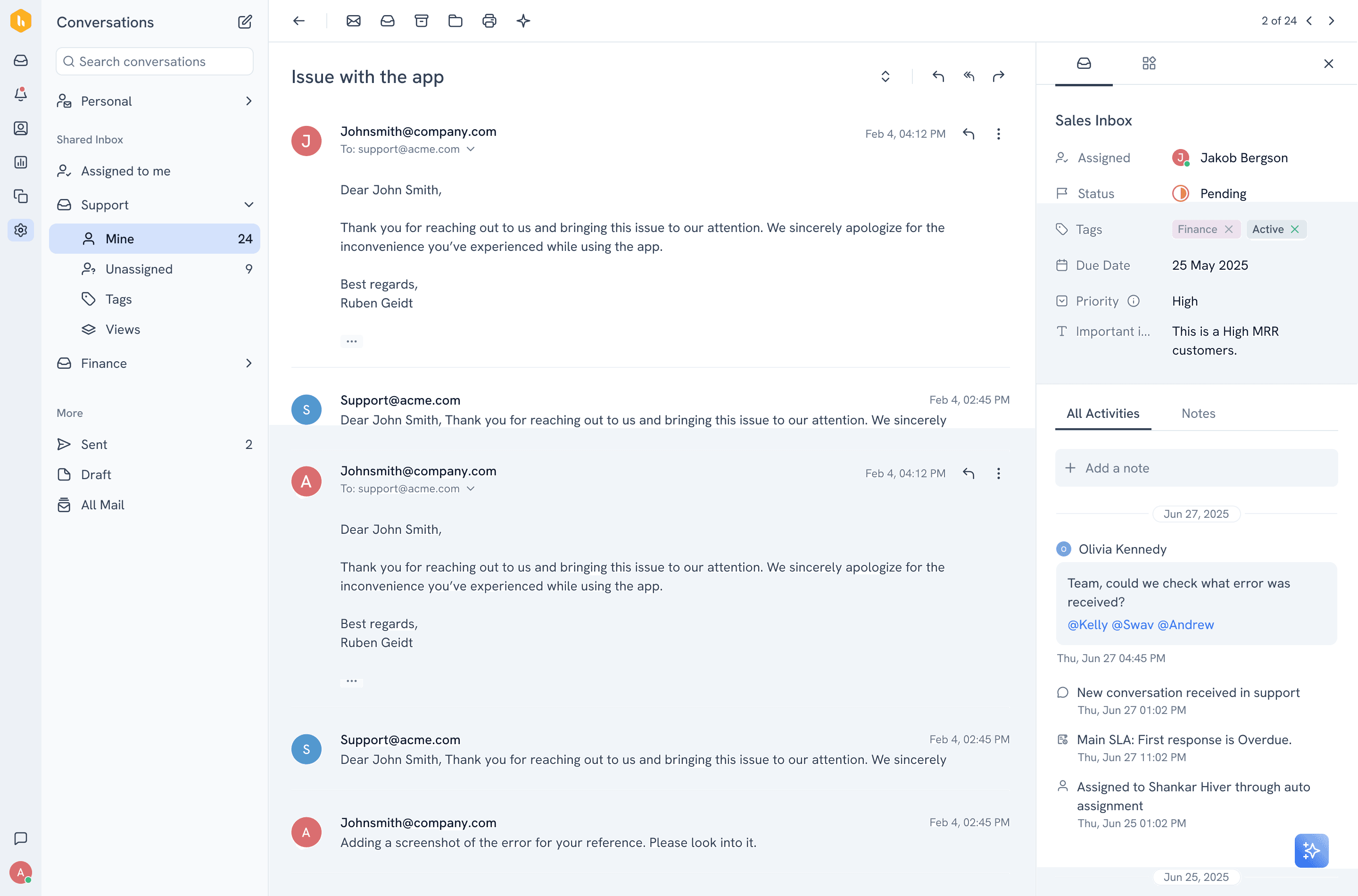
Phase 1: Launching MVP AI Drafting for Agents
We focused on boosting agent productivity to help them handle high email volumes with professional, resolved responses.
Pain Points
Agents spent too much time parsing long emails to understand intent, causing mental fatigue and context switching.
Writing replies from scratch led to inconsistent tone, typos, and policy errors.
Much of their time went to repetitive, low-value queries.
Customers faced delayed or generic responses, lowering CSAT scores.
Team leads had no visibility into reply quality before sending, increasing escalation risks.
High Average Handle Time (AHT) required hiring more agents, raising costs.

Business Goals
Reduce drafting time per email.
Increase the percentage of AI drafts sent as-is or with minor edits.
Raise emails handled per agent per day.
Improve CSAT via post-resolution surveys.
Provide team leads with pre-send reply visibility.
Shorten onboarding and training for new agents.
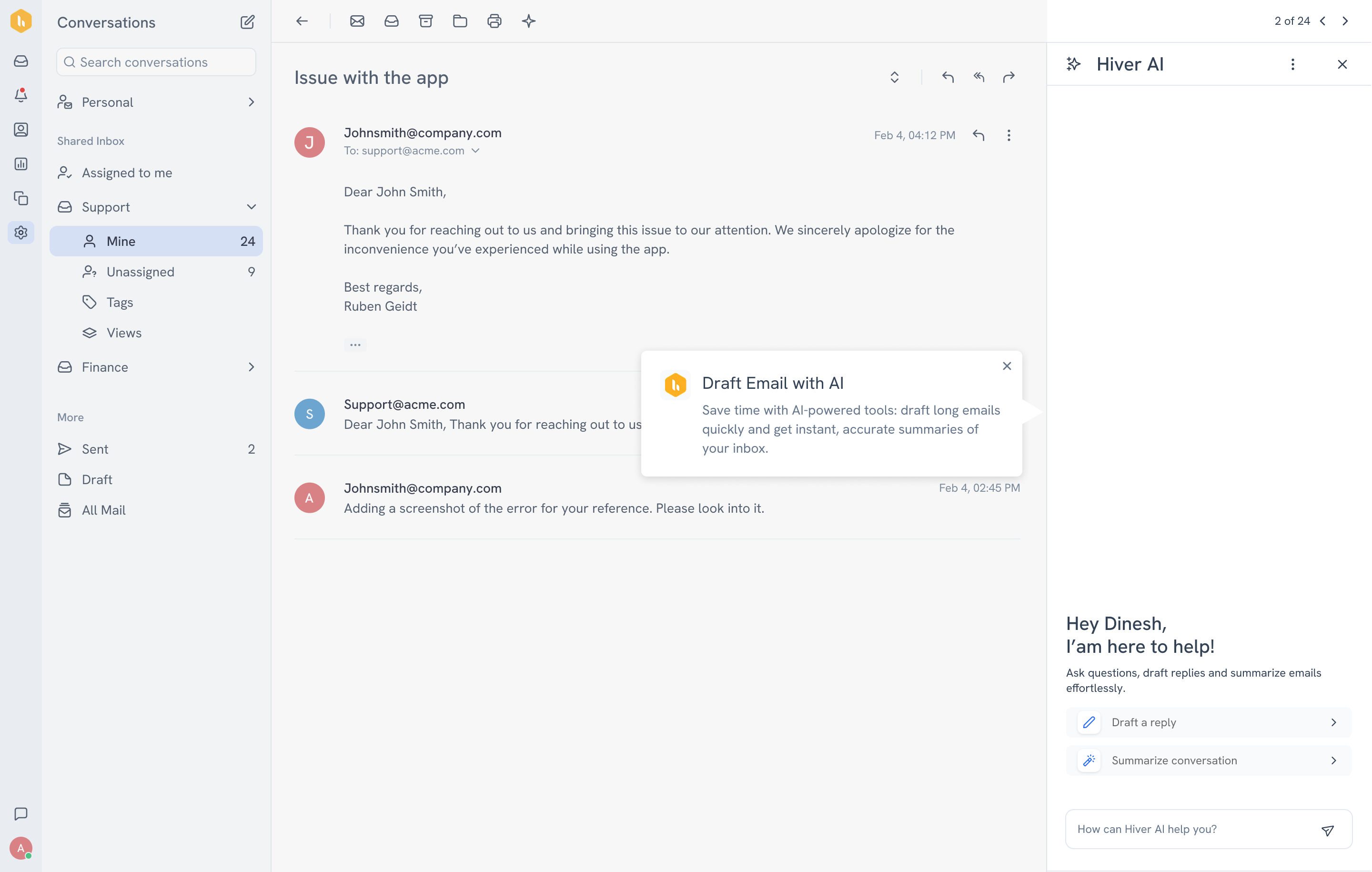
Phase 2: Adding AI History
Post-launch feedback revealed a critical gap: the AI operated without session memory, causing drafts and histories to vanish after 24 hours. This disrupted continuity in ongoing threads, eroded user trust, and complicated leadership oversight during escalations.
Pain Points
AI-generated histories expired after 24 hours, preventing agents from referencing prior drafts.
Without historical context, agents questioned draft accuracy and knowledge base adherence, fostering distrust in the AI tool.
Leadership struggled to audit AI usage and verify policy compliance in escalated cases.
Business Goals
Implement persistent memory tied to individual email threads for all AI interactions.
Enable agents to access draft histories swiftly within the interface.
Allow leadership to evaluate knowledge base utilization in AI outputs. Facilitate rapid identification of potential escalation threads.
Design Process and Iterations
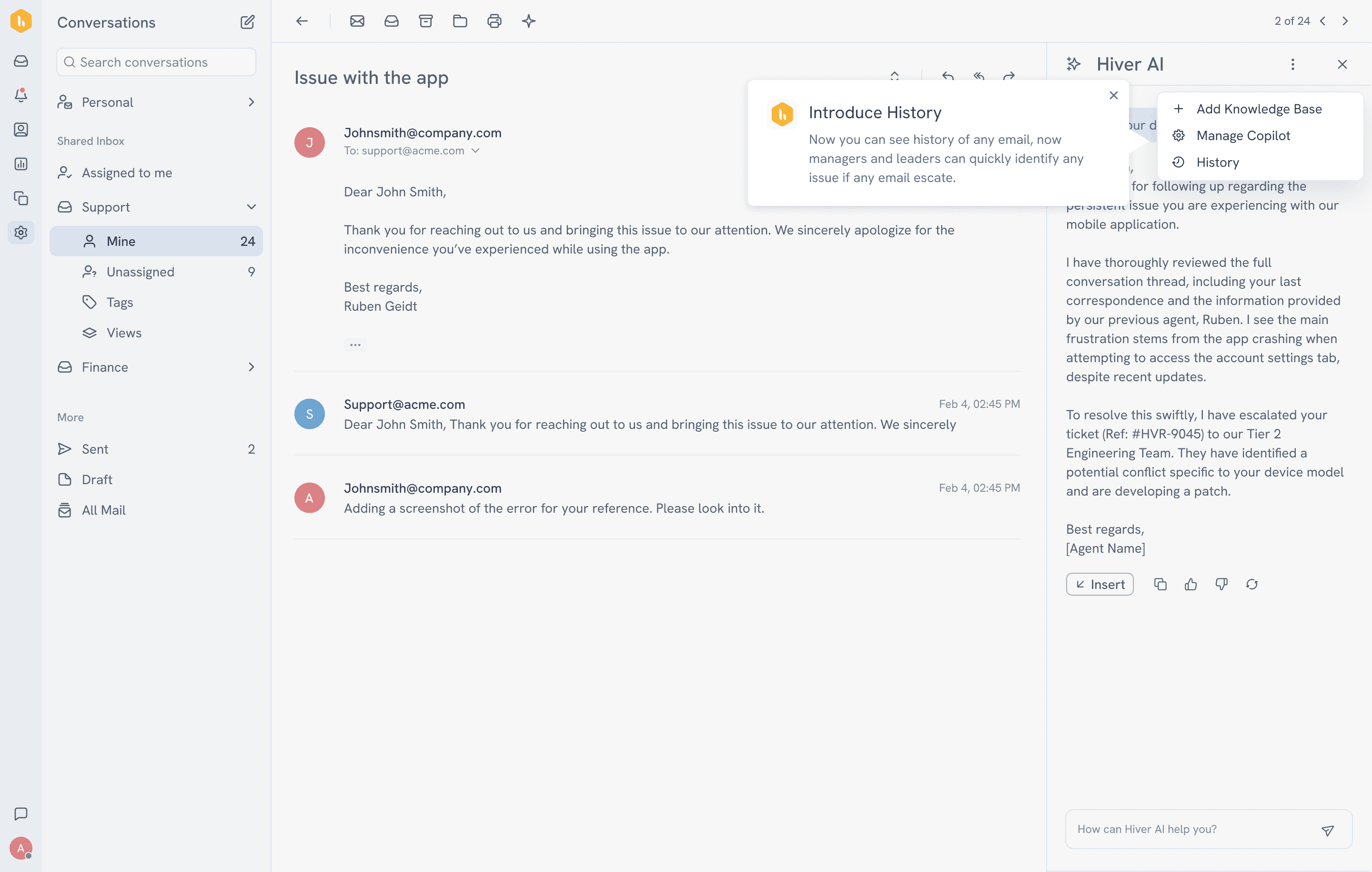
We gathered user feedback and made multiple discussions with designers, PMs, and engineers. We discussed scenarios like thread continuations and escalations, then prototyped solutions. The final design introduced persistent history logs per email, showing AI drafts, edits, and knowledge base references. This was simple to access via a sidebar in the Hiver interface.
Key Learnings and Impact
This project taught me key AI design lessons: Plan for "memory" in ongoing tools like email support to avoid trust gaps from short-lived outputs. We missed this at first but fixed it by reviewing similar tools and focusing on team feedback.
Outcome we expected: A stronger tool that speeds drafting, builds trust, and aids oversight—easing agent load and supporting collaborative goals. It sharpened my skills in user-focused AI design, quick prototyping, and team collaboration for growing products.